
Season's Greetings - Modular Rack FX Processing
Seasons greetings! In this patch we explored processing four MIDI controlled melodic voices through a Lexicon Super Prime Time delay and model 200 reverb to create a lush wintery soundscape.
The Synth Voices
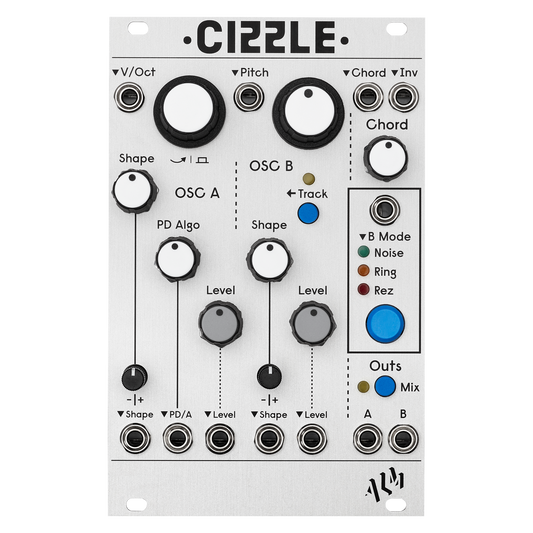
To start, we created four MIDI tracks in Ableton and connected the computer to two mmMidi MIDI to CV interfaces to sequence our voices. The mmMidi's were chained together using a MIDI to TRS adaptor and a standard headphone splitter. We created the bass voice using the CIZZLE, with a mix of both Oscillator A and B. Oscillator A was used for a thick mellow Phase Distortion bass tone and Oscillator B was set to produce a classic rich and resonant CZ wave.
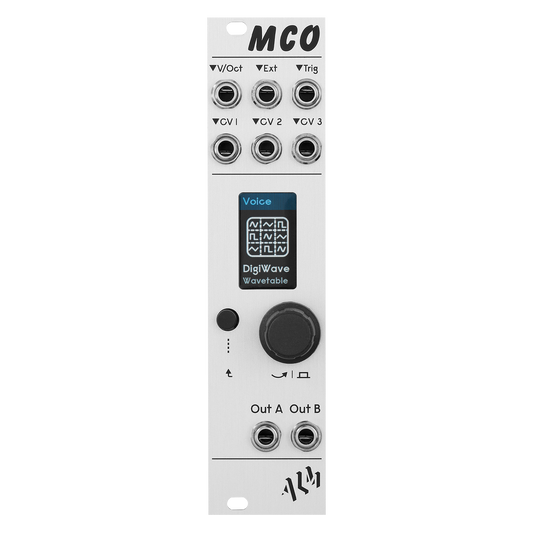
Next, three MCO's were used for melodies with each to a different voice program. The first MCO was set to the Virtana voice, a 90s style subtractive virtual analog synth voice with 2 oscillators. The pair of oscillators were detuned and one of the 3 built in LFOs was set to slowly modulate the cutoff of the on board filter.
The second MCO was set to the Tonesum voice, an additive voice for creating organic and physical sounds. The MCO's built in envelope was used to modulate the notch setting of the voice, sweeping across the harmonics each time a note was triggered.
The final MCO was set to the AEIOU voice, a vocal synthesis engine that mimics the vowel shapes and formants of a human voice. The Vox B shape was assigned modulation from one of the 3 built in LFOs set to triggered random, causing the shape to change randomly each time the voice was triggered. The four voices were mixed down in stereo using the Jumble Henge.

Sending Through FX
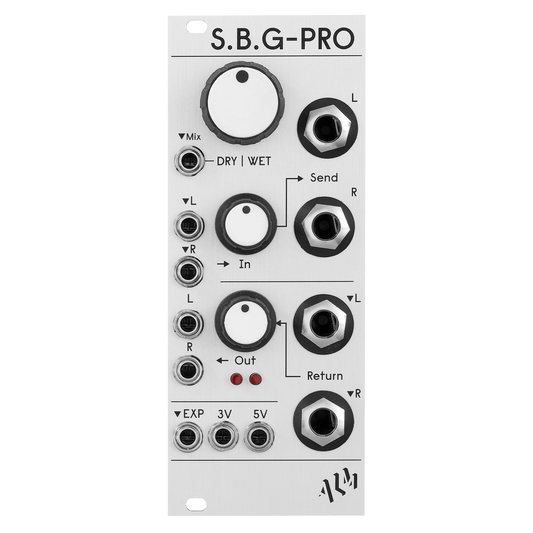
To glue everything together, the outputs of the Jumble Henge were patched into the S.B.G-PRO to be sent out through a Lexicon Super Prime Time delay and model 200 reverb. The left 6.35mm balanced send output was connected via patch bay to the input of the Super Prime Time with its stereo output patched in series directly to the model 200 reverb. The stereo output of the reverb was then returned back to the S.B.G-PRO's stereo 6.35mm return input and amplified to be mixed with the dry signal. The input and output gain settings of the S.B.G were tweaked to balance the levels with the effects units.
Once the Dry | Wet mix control was increased, the delay could be heard where it was set up to effect the patch. The reverb was then added via its own dry/wet mix control. Changes to both effects were performed throughout, to evolve the patch and build up a rich wall of sound.

Finally, the first 3 outputs of Pamela’s PRO Workout were set up like manual offsets controlled by the AXON-2 and patched to control the envelope time of each MCO. This smooth lengthening of the envelopes further fed the wash of the delay and reverb, creating a lush wintery soundscape.